The huge energy requirements of the new power-hungry data centres needed to drive the AI revolution has led to much talk of an extension of the hydrocarbons age to cover any shortfalls in electricity generation. Until now, efforts to make the AI sector more efficient and cut the amount of power it requires have received less attention, but that is changing.
Perhaps the most high-profile indicator that more efficient use of power is pivotal to the sector’s future was the recent market turmoil created by the revelation that Chinese start-up DeepSeek had developed a new AI model, which it said was less power hungry – as well as potentially cheaper and faster to build – than existing comparable technology developed in western countries.
But there are also less eye-catching developments dealing with the nitty-gritty of electricity generation and distribution that could be equally influential for the future of AI development.
One example is contained in a new study from researchers at Duke University in North Carolina.
They report that, if heavy power users such as data centres can occasionally cut their power use when the electricity grid is most stressed, the current US power system could cater to demand from new sources more quickly without extensive and costly system upgrades. This offers a short-term alternative to more expensive, less climate-friendly measures to boost energy production, in a country where peak power load could grow by 20% over the next decade.
Lead author Tyler Norris, of Duke University’s Nicholas School of the Environment, said the existing US power system capacity is intentionally designed to handle extreme peak demand swings, and so could accommodate significant load additions “with modest flexibility measures”.
“Overall, the findings suggest that load flexibility offers a promising near-term strategy for regulators and market participants to more quickly integrate new loads, reduce the cost of capacity expansion and enable greater focus on the highest-value investments in the electric power system,” he said.
Flexible approach
The report, which looks at grid conditions in the areas of balancing authorities covering 95% of the US power system, concluded that these authorities could collectively add nearly 100 gigawatts of large loads to the grid with minimal impact if users put “load flexibility” measures in place. Such measures to temporarily reduce electricity consumption from the grid could include switching to on-site generators, moving workload to other facilities or throttling back operations for a short period.
The researchers note that such an approach should not be highly disruptive, effectively building on demand response programmes already in place in the US. These incentivise large-scale industrial and commercial energy users to change their electricity usage patterns to help reduce peak loads or accommodate fluctuating energy generation from wind and solar power.
If the AI sector is to scale up in the way being envisaged by its leaders, then such relatively easily implemented measures could help reduce the need for costly power system upgrades or an extension of the energy transition.
There seems little doubt that a surge in energy demand from the AI sector will materialise. Experts are warning that plans to compete in the AI race taking place around the world could leave power infrastructure unable to cope. Meanwhile, global firms investing in AI are also teaming up to drive funding into energy infrastructure.
In January, US President Donald Trump endorsed the Stargate project, a plan by Oracle, Japan’s SoftBank, OpenAi and UAE-based MGX to invest $500bn in the construction of a network of data centres across the US and the power to supply them.
Time is of the essence, so if governments and the AI sector are to realise their ambitious plans, they will need to look beyond merely seeking to ramp up power generation and consider other solutions like the load flexibility approach.
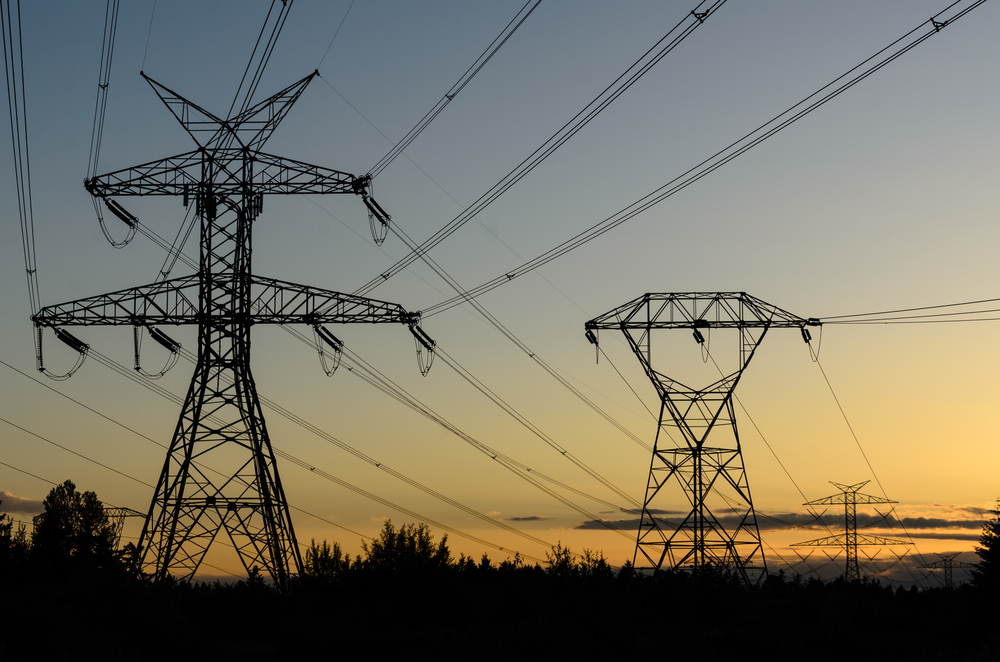
(Photo: Pylons in Washington State, US/Shutterstock