Oman may not yet have the global profile of its larger regional neighbours, Saudi Arabia and the UAE, when it comes to energy industry innovation, but the Sultanate’s leading energy firm is also undertaking an ambitious upgrade of its operations through further integration of AI and digital twin technology.
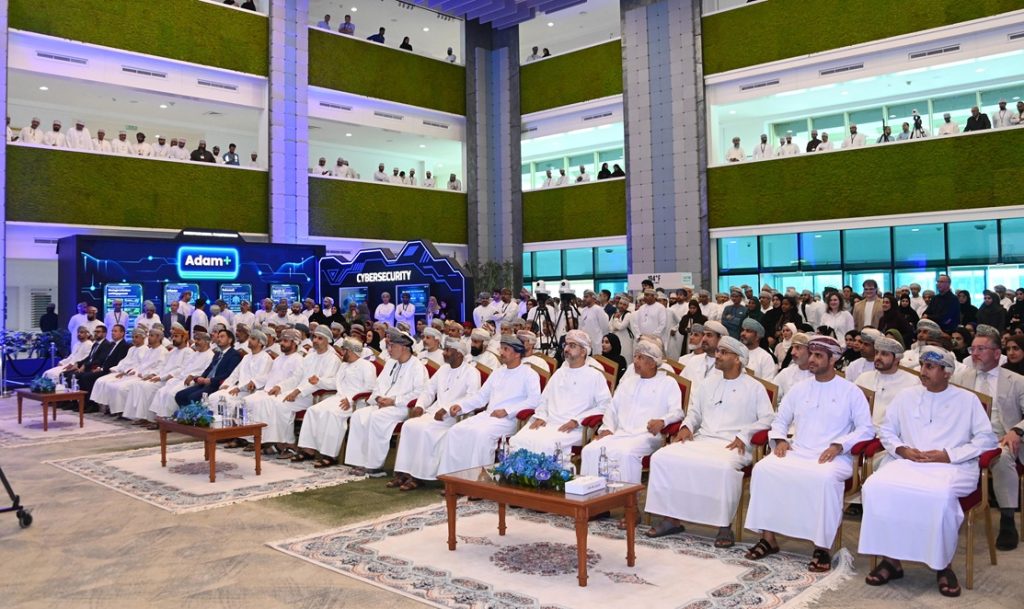
The latest moves were unveiled by Petroleum Development Oman (PDO) at its Autonomous and Digital Transformation Day on 26 October. These included the launch of a digital twin project, a digital well construction partnership with Halliburton and SLB, and an Autonomous Production Programme, along with various agentic AI solutions.
The oil and gas producer, which is owned by the Omani government with minority partners Shell, Total and PTTEP, said the event served as a showcase for its progress towards creating a more connected and intelligent operating environment, with integration of digital capabilities across the hydrocarbon value chain from exploration and field development to well construction, production and export.
The digital twin project is intended to integrate physical assets with digital models, live operational data and advanced analytics, providing greater visibility into asset performance, support predictive insights and enabling faster, more informed operational decisions.
The tie up with SLB and Halliburton takes the form of a five-year strategic partnership to advance digital well construction through various integrated digital capabilities linking subsurface planning with well execution.
The partnership aims to help standardise engineering workflows, strengthen cross-functional collaboration and improve productivity through more consistent, data-driven decision-making. PDO said the collaboration would also contribute to developing national talent through specialised training, graduate opportunities and knowledge transfer.
The Omani energy company is also furthering its AI capabilities, announcing its first agentic AI initiatives. These build on ADAM, PDO’s internal generative AI assistant, and are intended to take use of AI within the enterprise beyond information retrieval by supporting decision-making and carrying out defined tasks within governance and control frameworks. PDO has also introduced a digital solution known as WISAL to deliver a more integrated employee experience.
Another boost for the local technology industry to come out of the event was the signing of a Memorandum of Collaboration with an Omani firm Onsor Technology to support adoption of locally developed computing devices across its operations.
The collaboration is intended to create opportunities for Omani technology solutions to be deployed in an industrial environment, while supporting local innovation, product development and national technological capabilities.
PDO said these initiatives reflected its ambition to integrate AI and advanced digital technologies across its operations to deliver greater efficiency, resilience and competitiveness. They are also intended to support Oman Vision 2040 and the country’s efforts to develop a competitive wider economy through innovation and digital technology. No investment figures were provided.
AI demand drives data centre expansion
Oman’s homegrown energy resources also help make the Sultanate an attractive location for data centres to cater for the growing demand from AI. The country already has a number of data centre facilities, including two owned by Equinix. New capacity is on the way if a newly announced $3bn investment in a 400-megawatt (MW) data centre complex in Salalah with potential for further expansion comes to fruition.
The project consortium is led by Mubbadrah Investment, along with London-based Sustopia Capital, US-based Vela Tech and Dubai-based O2 Global Energy. The group aims to generate revenue by hosting computing capacity and providing infrastructure services to overseas customers.
Yasser al Barami, Mubbadrah Investment’s CEO, said Salalah was chosen as the site for the project due to its submarine cable connectivity, port, airport, free zone and renewable energy potential.
The data centre is set to be powered by both renewable and grid energy. Solar generation with battery storage developed by O2 Global Energy is expected to contribute to the renewables part of the mix.
The consortium has yet to provide detail on the construction timetable and financing arrangements and is dependent on commitments from customers.
(Photo credit: PDO’s Autonomous and Digital Transformation event/PDO)