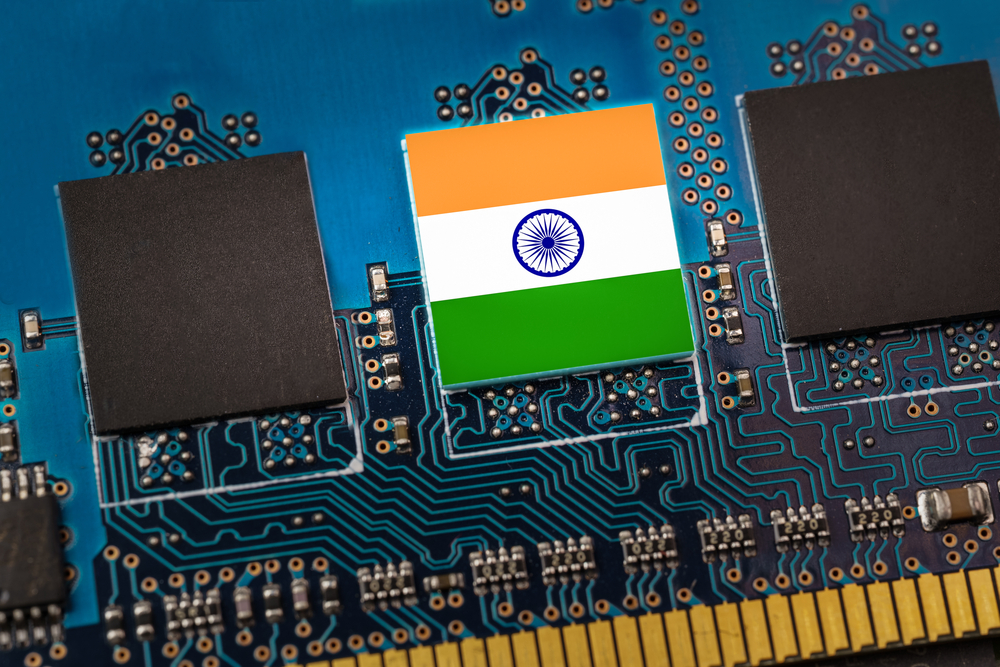
India’s desire to become an AI industry hub in Asia was underscored by a series of investments and policy announcements at last week’s India AI Impact Summit – an event that attracted heads of state and leaders from many of the world’s leading digital technology firms.
The summit in New Delhi was the first of its type to be held in the Global South, following on from conferences in the same series held at Bletchley Park in the UK, Seoul, and Paris. Its scale and high profile underscored India’s aspirations to become a leader in a field currently dominated by the US and China – and of the global industry’s awareness of India’s growing role in the sector.
The world’s most populous nation has benefitted economically over the last two decades from the development of world-leading expertise in software development. However, it lags in providing the types of AI breakthroughs being made in western countries and China, in part because the country has lacked the cutting-edge infrastructure needed to compete.
The hope is that the more than $200bn of investments in AI infrastructure announced by the government, India’s big industrial groups and global tech players at the event, in addition to projects already under way, will change that situation.
The largest of these pledges were plans unveiled for Reliance Industries and its Jio telecom subsidiary to invest nearly $110bn over the next seven years to build AI and data infrastructure across the country.
Reliance Chairman Mukesh Ambani told the summit that the investment would back the construction of high-capacity data centres, a national edge computing network and new AI services based around the company’s Jio telecom platform. Reliance is already building data centres in Jamnagar, Gujarat, with more than 120 megawatts of capacity expected to come online in the second half of 2026.
Another large Indian conglomerate, the Adani Group, said it would invest $100bn in AI data centres by 2035, which could lead to a further $150bn of investment across related industries, such as server manufacturing and sovereign cloud platforms.
Crucial to India’s plans for a speedy roll out of energy-hungry data centres will be the expansion of solar and wind power generating capacity, which both Reliance and Adani have said they will fund. Another issue that will need to be resolved is the need for adequate water supply to keep data centres cool, with concerns already voiced over plans to build data centres in regions facing water shortages.
The global tech companies were also keen to use the summit to highlight their investments in India and the wider developing world. Microsoft, for example, said it was on track to invest $50bn by 2030 to help expand AI to countries across the Global South. In 2025, Microsoft said it was making more than $17bn of AI-related investments in India.
Call for cooperation
However, India’s political and corporate leaders are acutely aware that gaining a toehold in the global AI industry will require cooperation with foreign companies that, while keen to sell their own products in the developing world, may not be so eager to share valuable know-how if that allows global rivals to spring up.
Mukesh Ambani, Reliance Industries’ Chairman echoed similar sentiments from Indian Prime Minister Narendra Modi, when he made a plea at the summit for a more collaborative environment to speed up AI development,
Ambani said a polarized world stood at a fork in the road, with one path leading to a situation where AI was scarce and expensive, compute power was concentrated, data was controlled and capability was locked behind barriers of capital and geography in the Global North.
“In this dismal scenario, inequality widens between nations, within societies and across generations. But there is another path: a future where AI is available, affordable and beneficial to all,” he said. “I want to make a bold prediction. India will emerge as one of the greatest AI powers in the world in the 21st century.”
(Photo: Shutterstock)