The potential for natural gas to offset the looming shortfalls in electricity generation needed to power energy-hungry AI processes is well established, as is the concept of building dedicated “behind the meter” generating capacity next to data centres to reduce strain on already-overburdened electricity grids.
But the recent announcement by Chevron that it plans to develop a co-located power facility at a Microsoft data centre in the US is the clearest indication yet that some of the world’s big oil and gas producers feel they need to play a significant role in the process by securing a new diversified revenue stream, while helping to embed natural gas in the future energy mix.
Chevron and investment firm Engine No.1 have been collaborating on the Project Kilby development, which is expected to deliver around 2.67 gigawatts (GW) of capacity to a Microsoft-operated data centre in Pecos, West Texas under a 20-year power purchase agreement. Microsoft said the data centre, now under construction, would be one its largest ever single capacity additions.
Generating capacity at the power plant will be built up over time using a modular approach. Most of its power will be generated by GE Vernova turbines, with additional capacity provided by Caterpillar’s Solar Turbines subsidiary. Chevron plans to make a final investment decision on the power project by the end of 2026, with first supply to the data centre scheduled for 2028. No financial details have been released.
Jeff Gustavson, Chevron President of New Energies, said his firm was “uniquely positioned” to deliver power to customers with certainty, speed and at a competitive cost, using Permian Basin gas and the company’s execution capabilities.
“This project links Chevron’s traditional strengths to emerging demand, creating differentiated value for our shareholders and the communities where we operate,” he said.
Hydrocarbons producers are well versed in developing power plants to supply their own facilities, but the Kilby project is a shift up in scale.
The company said the move represented an opportunity to diversify its business by generating cashflow that is independent of oil and gas cycles. The steady “mid-teens” returns Chevron says it is targeting from Kilby represent a different type of investment opportunity from the more volatile but potentially higher returns from hydrocarbons production. However, it remains to be seen to what extent oil and gas producers are prepared – or able – to scale up a move into power infrastructure linked to data centres.
Chevron is not alone among US oil and gas producers in eyeing up the sector. ExxonMobil, for example, has said it is looking at developing co-located power plants at data centres in conjunction with tech firms, and has also outlined plans to fit power facilities at data centres with carbon capture and storage technology to reduce emissions.
Meanwhile, Williams Companies, a US energy infrastructure operator, is approaching the “one-stop shop” model for gas supply to data centres from a different point in the supply chain – the company is considering buying gas production assets to provide supply to its growing portfolio of co-located power plants, according to a Reuters report in February.
This month, Williams said a consortium led by investment firm Blackstone would invest $5.34bn for a 49% stake in five of Williams’ new power generation projects, providing capital for the expansion.
Rising electricity demand
There looks certain to be no shortage of opportunities for the majors to compete if they do choose to scale up their involvement in co-located power, given the rising pressure on electricity grids.
In a mid-2026 update, the International Energy Agency (IEA) forecasts global electricity demand will grow by 3.6% in 2026 and 3.8% in 2027, compared to 3% in 2025. The IEA said the rapid expansion of data centre capacity was among the structural drivers behind the increased demand, along with wider industrial growth, increasing appliance ownership, and accelerating uptake of electric vehicles, air conditioning and heat pumps.
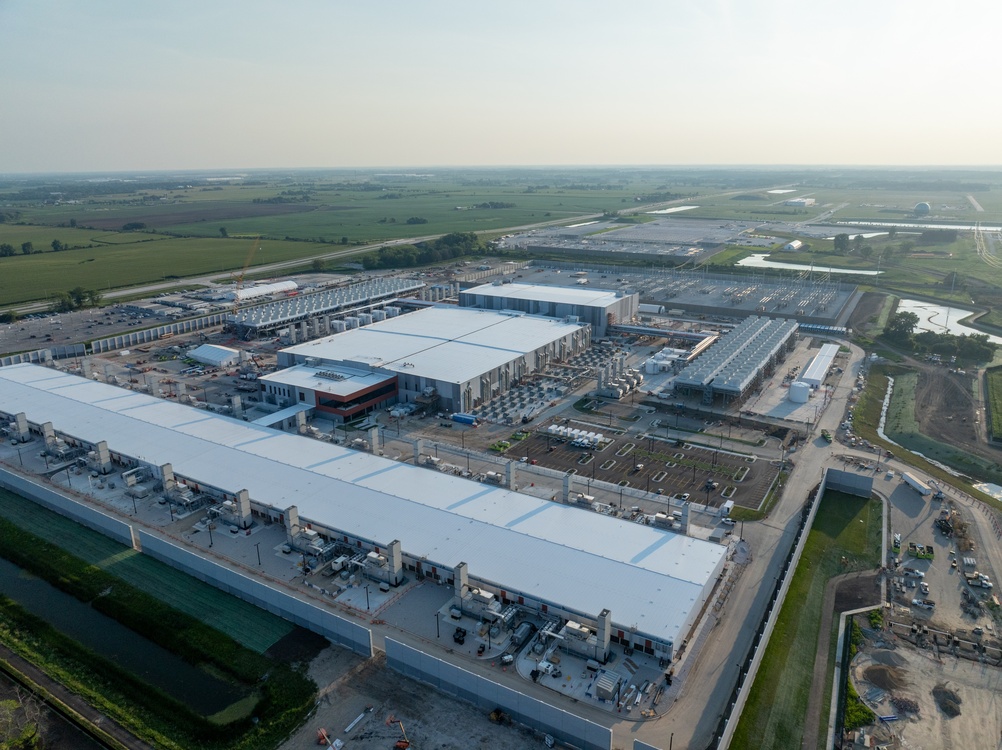
(Photo: cflaten/Shutterstock – Microsoft’s Fairwater AI data centre in Wisconsin under construction in 2025)