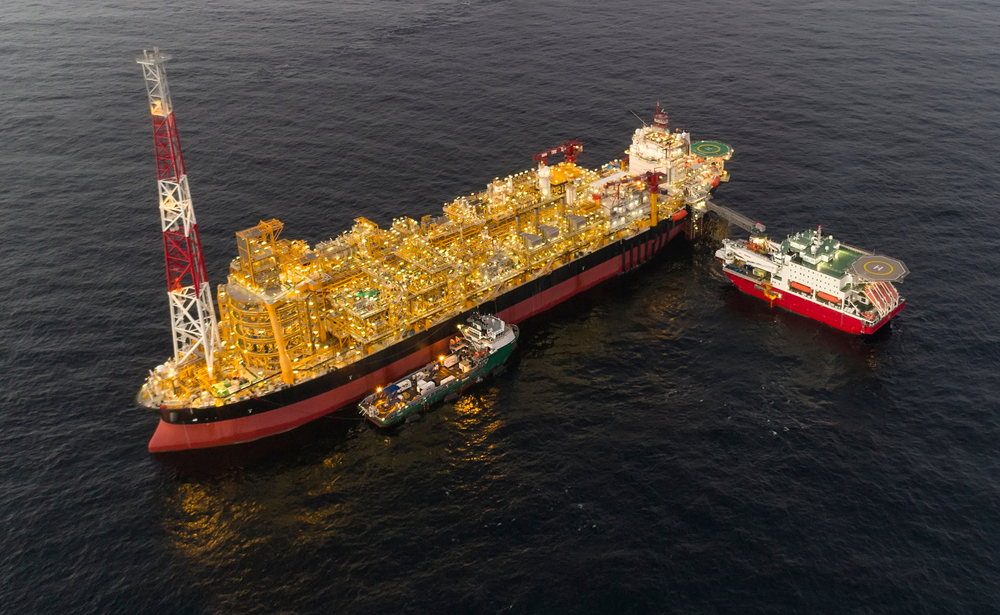
One area of the offshore industry where digital twins offer potential to play a significant role in optimising operational efficiency, reducing downtime and cutting costs is in the maintenance of Floating Production Storage and Offloading (FPSO) vessels.
The predictive capabilities offered by digital twins look set to offer a huge leap forward by enabling more accurate and reliable assessments of the structural integrity of FPSOs than is possible using time-consuming traditional assessment methods relying on simplified models. The result should be improved performance, extended FPSO life and reduced production losses
Given the harsh conditions in which FPSOs may be deployed and the complex engineering required to remedy problems if they are not averted, possible cost savings for the industry through using digital twins could add up to hundreds of millions of dollars.
That is the view from Akselos, the Swiss-based developer of structural performance management software, which has just completed a technical assessment of structural digital twin technology for FPSOs in conjunction with the American Bureau of Shipping (ABS), the Houston-based offshore classification organisation
Akselos said that a data-driven approach could improve operational cashflow by reducing inspection and maintenance costs by up to 33%, minimizing both planned and unplanned downtime, and enhancing safety by limiting human exposure in hazardous operational areas.
Claus Reimers, Chief Product and Technology Officer at Akselos, said the digital twin application allows operators to simulate the structural integrity of an entire FPSO in real time and at full fidelity, supporting smarter, safer decisions across the asset lifecycle.
“This joint work confirms the robustness of our software and reinforces the growing momentum for digital transformation in offshore oil and gas,” he said.
Dynamic model
By combining inspection records, metocean conditions, and cargo operations into one dynamic model, operators can gain a live, continuous view of structural performance, according to Akselos. This allows for real-time monitoring, identification of stress concentrations, and on-demand fatigue analysis to support data-driven maintenance and risk-based inspections.
When supported by ABS’ inspection data management and condition tracking software tools, the software is capable of monitoring real-time load and condition information within a digital twin framework that enables full life cycle support of an offshore asset, Akselos said.
The work benefitted from a long-standing collaboration between Akselos and ABS, including joint digital twin deployments in Brazil’s Cessão Onerosa oil field.
Matt Tremblay, Senior Vice President, Global Offshore at ABS said the collaboration had reinforced the role of high-fidelity digital twin technology in offshore structural integrity.
“By combining real-time operational data with advanced simulation, Akselos is enabling a more predictive and performance-based approach to asset management—fully aligned with the industry’s drive toward safer, more efficient operations,” he said.
In November, Akselos and ABS also agreed to work together to advance the engineering, design verification, certification, and classification phases of floating wind projects, using Akselos’ structural risk mitigation and optimization technology.
That underscores how offshore wind is another growing focus for digital twin developers in the energy sector. We recently reported on how Aberdeen-based Fathom and CGI are collaborating to create a digital twin platform to cut costs and improve efficiency for windfarm operators.
(Photo: Shutterstock)