AI is helping to make weather forecasts more accurate and faster to produce. That is a boon for all of us, but it has particular relevance across the energy sector, from enabling better preparedness for storm impacts on upstream personnel and infrastructure offshore to planning for future energy demand.
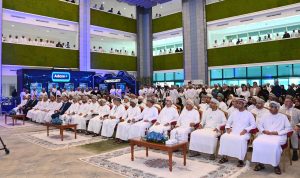
So, it is no surprise that Google Cloud was keen to promote its new AI-driven weather applications for enterprises at the annual CERA week energy conference, held in Houston in early March.
Google says the models provided by its WeatherNext AI-driven systems could help energy customers more accurately predict energy demand and expected supply, better anticipate and prepare for storms, and protect their assets.
Elsewhere, they will help retailers to better optimize inventory management based on anticipated demand fluctuations, enable supply chain businesses to more effectively reroute shipments and help manufacturers to optimise production schedules based on weather impacts.
By opening up the WeatherNext applications to enterprises, the tech was “moving from the research lab to the real world”, according to Pete Battaglia, Director of Research for Sustainability at Google DeepMind.
“It puts companies in the driver’s seat to proactively prepare for extreme weather and better serve their communities,” he said.
The urgent need to prepare for extreme weather events is in little doubt, even just in terms of financial cost. The US National Centers for Environmental Information says the US has suffered 403 weather and climate disasters since 1980 where overall damages and costs of the event reached or exceeded $1bn in terms of today’s money. It estimates that those events together claimed almost 17,000 lives, while their total cost has been some $3trn.
Google has deep pockets and some of the most advanced technology at its disposal, but it is just one of many organisations and academic institutions seeking to apply AI to weather forecasting over the last decade or so. That means the body of evidence on the accuracy of AI-powered forecasting compared to existing physics-based modelling is growing.
In simple terms, AI weather forecasts use machine learning to make predictions, based on probabilities derived from the evolution of current and historic weather patterns. In a similar way to large language models like ChatGPT, the more data the system is trained with, the more accurate it gets.
By contrast, Numerical Weather Prediction (NWP), the main tool for forecasting in recent decades, is rooted in feeding weather data into supercomputers running complex equations related to atmospheric physics, albeit with reference to historical weather patterns.
Improving outcomes
Meteorology experts are generally positive about the results from AI, with some caveats.
In particular, AI-driven forecasts tend to be more accurate than NWP forecasts when looking at the medium to long term. On the downside, they sometimes underestimate the intensity of the most extreme events, and they can also miss some detail that NWP may pick up as they tend to analyse slightly broader geographical areas and present data for less frequent time intervals.
Nevertheless, research just published in the journal Nature found that Google’s GenCast model had greater skill than the highly respected ensemble forecast of the European Centre for Medium-Range Weather Forecasts on 97.2% of the more than one thousand targets evaluated in the study, as well as predicting extreme weather, tropical cyclone tracks and the potential for wind power production better.
Another area where AI scores heavily over NWP is in the speed at which a forecast can be delivered. GenCast take a few minutes to generate a 15-day forecast using a Google Cloud TPU machine-learning chip, compared to hours using costly and energy-intensive supercomputer capacity to derive a similar NWP-based forecast.AI-driven forecasts may be fast and relatively simple for users to generate but they will not be replacing meteorologists or eliminating traditional forecasting. Given the room for error in both AI and NWP approaches, a combination of the two is likely to provide the best chance of getting the weather forecast right.
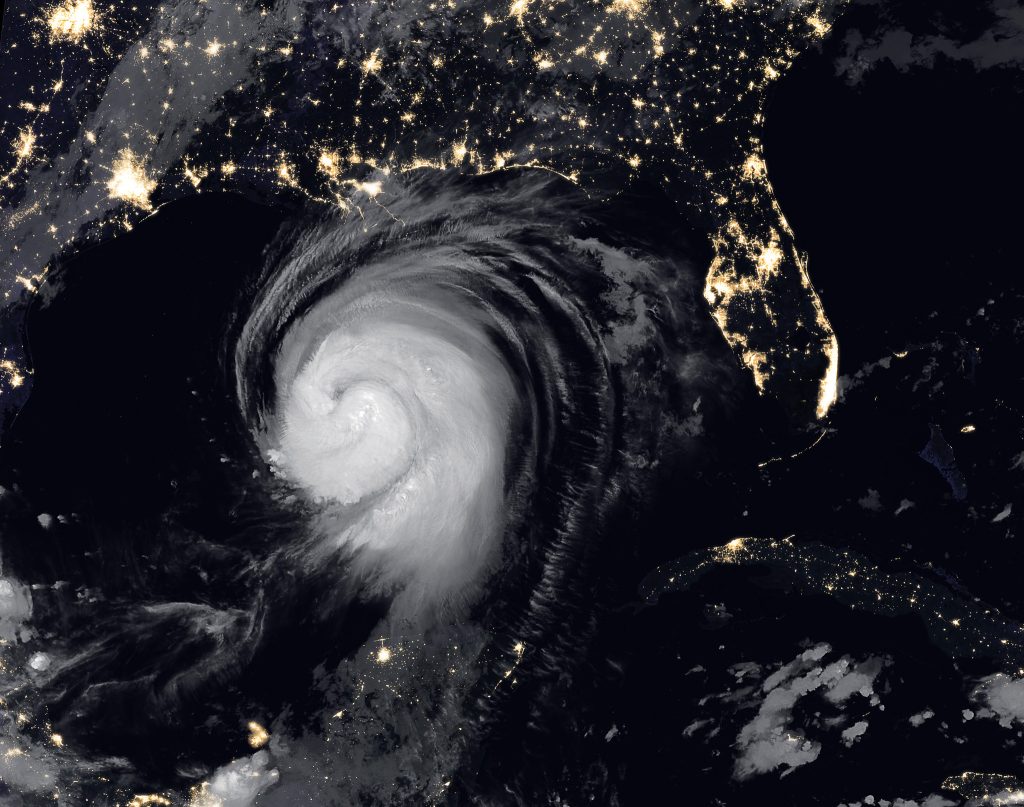
(Photo: Infrared image of Hurricane Laura moving across the Gulf of Mexico in 2020/Nasa Earth Observatory)