Engineering has never been about certainty. It has always been about understanding uncertainty well enough to make good decisions. That principle is becoming more important as the oil and gas industry accelerates its use of digital twins, data platforms and artificial intelligence (AI).
The promise is compelling: faster access to technical history, more consistent reporting, better visibility of risk and the ability to interrogate complex integrity records in ways that were previously impractical. But in asset integrity, confidence cannot come from technology alone.
This distinction is particularly important for the hull integrity of floating production storage and offloading (FPSO) vessels. Inspection access is limited, expensive and operationally disruptive. Internal spaces may only be available at long intervals, and inspection campaigns often have to be completed within tight operational windows.
Each opportunity to inspect must therefore capture data that remains valuable long after the immediate campaign has ended.
Between those inspection windows, owners and operators still need assurance. They need to understand condition, risk and remaining uncertainty well enough to justify decisions on inspection, repair, deferral, life extension and continued operation. They also need to explain those decisions to different stakeholders at different points in the asset lifecycle.
Data interpretation
The challenge is not simply whether data exists. The challenge is whether captured data has been interpreted well enough to become information that can be trusted, understood and reused when the next question is asked.
Modern inspection programmes generate large volumes of data: inspection results, thickness measurements, anomaly findings, photographs, non-destructive testing reports, coating assessments and other survey commentary. On its own, that data is not yet the same as useful information. It becomes information when it is interpreted in context, taking into account previous condition, deterioration mechanism, consequence of failure and assessed risk.
That interpretation is the engineering step. It is what turns findings into anomalies, and then the ranking of anomalies into a basis for proportionate action, prioritisation, continued monitoring or a justified conclusion that no immediate action is required.
When evidence is connected, contextualised and preserved alongside the reasoning behind decisions, the organisation can return to that information with confidence when future questions arise.
This is where AI can be powerful, but also where its limitations become clear.
AI has the stamina to search through large volumes of historic material. It can help engineers find relevant references, compare previous findings and surface evidence for changing operational, commercial or regulatory questions. In that sense, AI changes the economics of attention: it helps organisations return to their own technical history when people, priorities and asset strategies change.
However, AI cannot create trust where the underlying record is incomplete, inconsistent or poorly governed. If the source data is uncertain, disconnected or missing context, AI may simply make poor information easier to consume.
Supporting future decisions
The greatest value begins earlier, with disciplined data capture, sound engineering interpretation, and the preservation of resulting information in a trusted integrity record that can support future decisions.
This is the problem that the PYXIS platform developed by Marine Technical Limits (MTL) was built to address. It is a practical integrity management system shaped by real FPSO hull integrity work, not by abstract digital ambition. PYXIS goes beyond storing inspection data by helping asset teams plan what evidence they need before the inspection begins.
The system links inspection intent, defined scope, captured evidence, technical assessment and final outcome in a single engineering record, so the route from objective to assurance remains visible long after the campaign is complete.
That matters because assurance is built over time, not produced by a single inspection report. Good decisions depend on knowing what was intended, what was examined, what was found, how it was assessed and why a particular response was selected.
PYXIS is designed to maintain that chain of reasoning, helping asset teams move beyond static reporting towards a more connected view of hull condition, anomaly status and integrity risk.
In practice, a PYXIS campaign may begin with a defined requirement to confirm the condition of selected tanks, structural details or known areas of concern. The inspection method then reflects the access available and the evidence needed.
Photographs, video footage and thickness measurements may be gathered by drones, ROVs or manual inspection teams, with each record tied back to the relevant location, component and inspection purpose.
PYXIS then supports the engineering review: classifying anomalies, considering deterioration mechanisms, assessing consequence and determining the appropriate response. That response may be repair, further monitoring, prioritised follow-up or confirmation that no immediate action is required.
For operators, the benefit is practical. When access is limited, every inspection has to achieve its objectives. PYXIS helps preserve the value of that inspection by ensuring that findings are not treated as isolated observations, but as part of an evolving technical record. When a question arises later, whether about deterioration, repair priority, historic justification or readiness for life extension, the interpreted information is easier to find, easier to understand and easier to defend.
Connected systems
For MTL, PYXIS also reflects a wider belief about the future of digital integrity management.
The industry gains most from connected systems that respect engineering judgement, while making the supporting evidence more accessible, consistent and transparent. It needs digital tools built around inspection realities, operational constraints, anomaly history and the long life of offshore assets.
This is the engineering record on which AI can become genuinely useful. When information has been interpreted, structured and governed, AI can help retrieve and interrogate it more effectively. It can support faster preparation, more consistent reviews and better use of historic decisions. PYXIS provides the digital backbone for a connected hull condition record that is ready to support assurance.
The conversation around AI in oil and gas will continue to move quickly. That is welcome, but the most valuable progress will come from applying these technologies to real integrity questions. In hull integrity, progress starts with clear engineering intent, purposeful evidence gathering and disciplined interpretation, so that engineers understand the asset, the confidence they can place in the data they have, and the significance of the data they do not yet have.
MTL PYXIS is built for that challenge. It gives operators a practical way to connect inspection planning, field evidence, engineering assessment and assurance in one coherent record. In doing so, it supports the responsible engineers of today as they make decisions from a vast body of inspection data, technical history and prior judgement, much of which may have been captured by different teams, contractors or previous generations of asset engineers.
It also gives digital twins and AI something more valuable to work with: information that reflects the purpose of the inspection, the evidence collected, the uncertainty that remains and the judgement applied.
About the author

Calum MacLean is Projects Director at Marine Technical Limits, specialising in the development and delivery of engineering-led integrity management solutions for offshore assets, with particular focus on FPSOs and complex hull structures. With over 25 years’ experience in hull integrity engineering, he has led the development and implementation of integrity management systems, ageing asset strategies, and life extension assessments across a wide range of offshore assets.
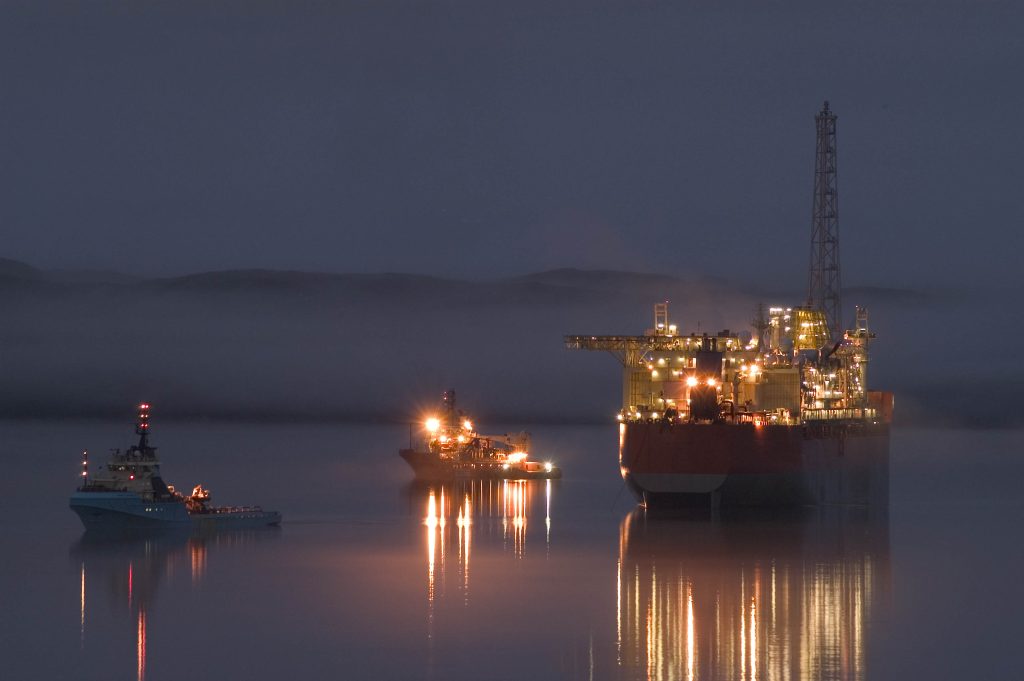
(Main photo: Sea Rose FPSO / Berardo62 via Wikimedia Commons)