The pressure is on oil companies to get significantly more out of their existing fields, as they seek to maintain output and make productivity gains in the face of challenging conditions for greenfield exploration. It is a tough task, but one that AI-based analysis shows could be achievable, especially if national oil companies in some parts of the world raise their game.
A recently published study by Wood Mackenzie uses AI-powered tools to show that existing fields could produce more than 1trn additional barrels just by using proven recovery methods, potentially meeting global demand through to 2050 without the need for greenfield exploration. Wood Mackenzie’s base-case forecast for total liquids demand by mid-century is just under 1trn barrels.
The consultancy has applied its own Synoptic AI tools and a feature called Analogues to its extensive oilfield database to deliver insights into recovery upside, which it says have previously been overlooked. According to Wood Mackenzie, they show existing fields are far from exhausted.
The analysis indicates better recovery from producing fields could yield an additional 470bn to over 1trn barrels, just by applying established best practices already being deployed successfully rather than unproven technologies.
Andrew Latham, SVP Energy Research at Wood Mackenzie said improved recovery factors would be essential if future demand for oil was to be met, as there were unlikely to be anywhere near enough new fields to offset the natural decline of existing supply.
“Using AI to help understand the potential of existing fields and gauge how much the world will need new fields in future represents a significant advance from traditional field analogue methods based on filtering that produce biased results,” he said.
The analysis studied over 30,000 fields globally using machine learning to identify similar analogues across more than 60 parameters. Wood Mackenzie looked at proprietary data on reservoir geology, hydrocarbon quality, in-place resources, operator access to finance and technology, costs and fiscal terms.
NOC potential
The research showed that national oil companies (NOCs) and state-controlled enterprises operate fields containing more than 320bn barrels of upside potential, assuming a top-quartile recovery factor was achieved, and 700bn barrels in the case of “best-in-class” recovery. Iran, Venezuela, Iraq and Russia are identified as countries with the largest recovery upside potential.
NOCs currently achieve recovery factors slightly below the industry average of 29%, despite operating fields with geological potential for best-in-class performance of 39%, according to the study. That contrasts with the much smaller gains on offer from fields operated by major international oil companies, which control just 6% of global upside potential due to their already strong performance levels.
“The future of oil supply will be increasingly onshore and NOC-operated. While majors have demonstrated superior recovery factors, they’ve become victims of their success with limited remaining portfolio upside,” Latham said.
Wood Mackenzie said the performance gap indicated there were substantial opportunities for international oil companies and service providers to create deeper partnerships with state enterprises.
The AI-powered analysis showed that upside potential lay almost entirely in onshore and shallow offshore fields, which accounted for 63% and 31% of best-in-class opportunities, respectively. Deepwater fields, usually operated by companies with leading technology, hold less than 6% of remaining upside.
According to the consultancy, producers must make the most out of existing fields in light of the growing hurdles facing explorers. Although the industry may have almost 2trn barrels in undeveloped greenfield resources, up to 90% of those could remain undeveloped due to the prevailing challenging economics or technical constraints.
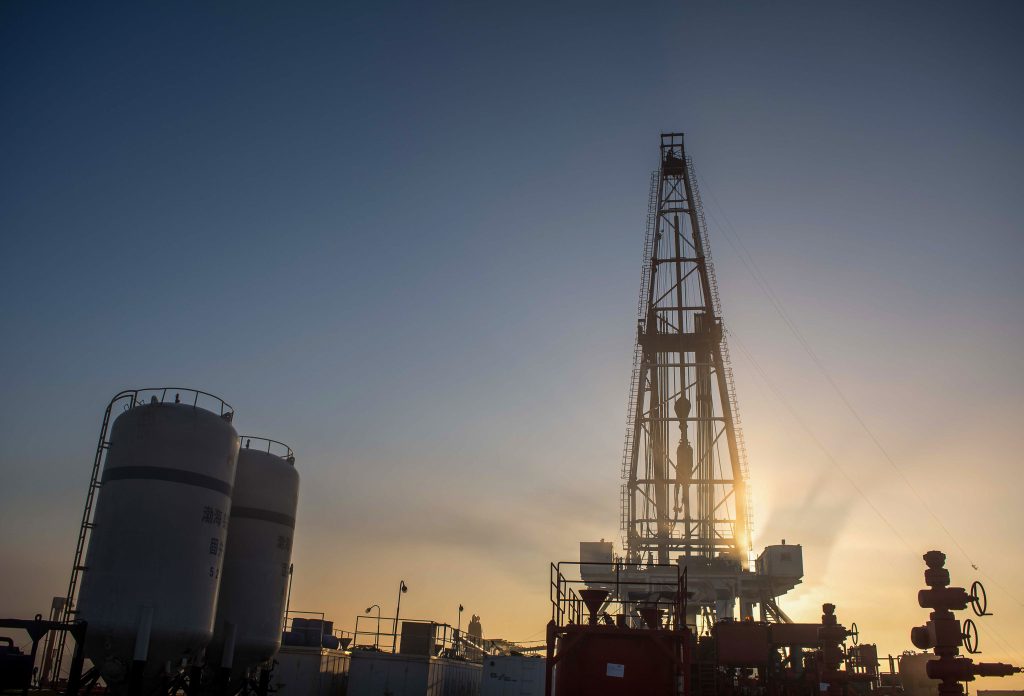
(Photo: Drilling rig in Iraq/Shutterstock)