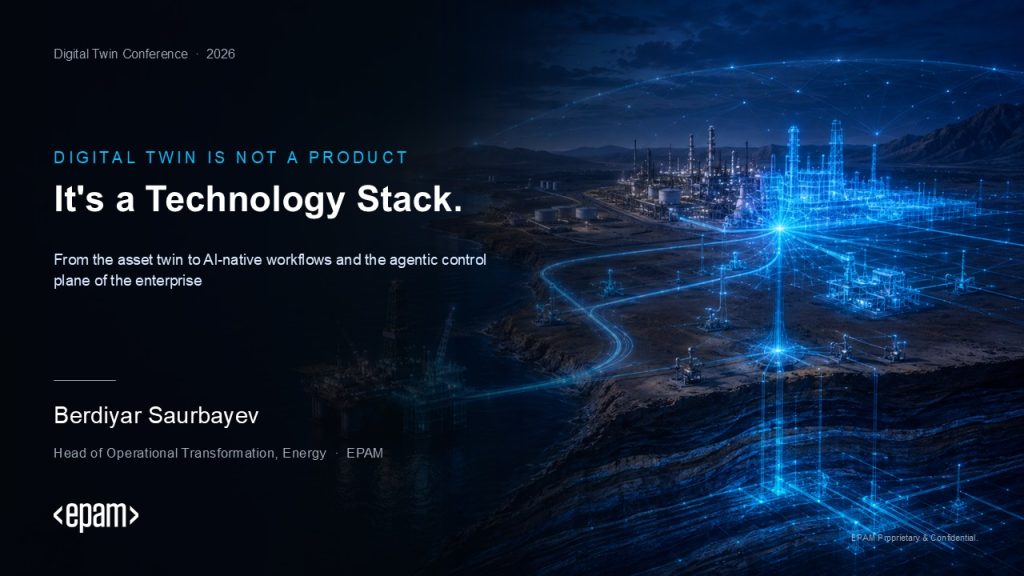
Digital Twin Is Not a Product. It’s a Technology Stack.
Berdiyar Saurbayev, Managing Principal, Energy Consulting at EPAM Systems
A digital twin delivers its greatest value when it moves beyond visualisation and becomes the foundation for operational workflows. This presentation explains why organisations should treat the twin as a connected technology stack rather than a single product.
Berdiyar Saurbayev, Managing Principal for Energy Consulting at EPAM Systems, outlines five essential layers: document digitisation, contextualisation and knowledge graphs, visualisation, use case enablement and an AI-native operating system.
The presentation shows how these layers can connect engineering documents, maintenance history, enterprise systems and live operational data through a consistent semantic model. Targeted workflows can then support activities such as turnaround planning, integrity management, permits to work and operator rounds.
Berdiyar also examines how AI is changing the economics of software development. A shared data foundation and reusable capabilities can accelerate workflow creation, while governance, permissions, observability and human oversight help prevent fragmented applications, hidden costs and uncontrolled automation.
Explore the full presentation below to discover why organisations should own the data, context, workflows and control layers that define their business, while retaining the freedom to integrate suitable technologies from the wider market.