

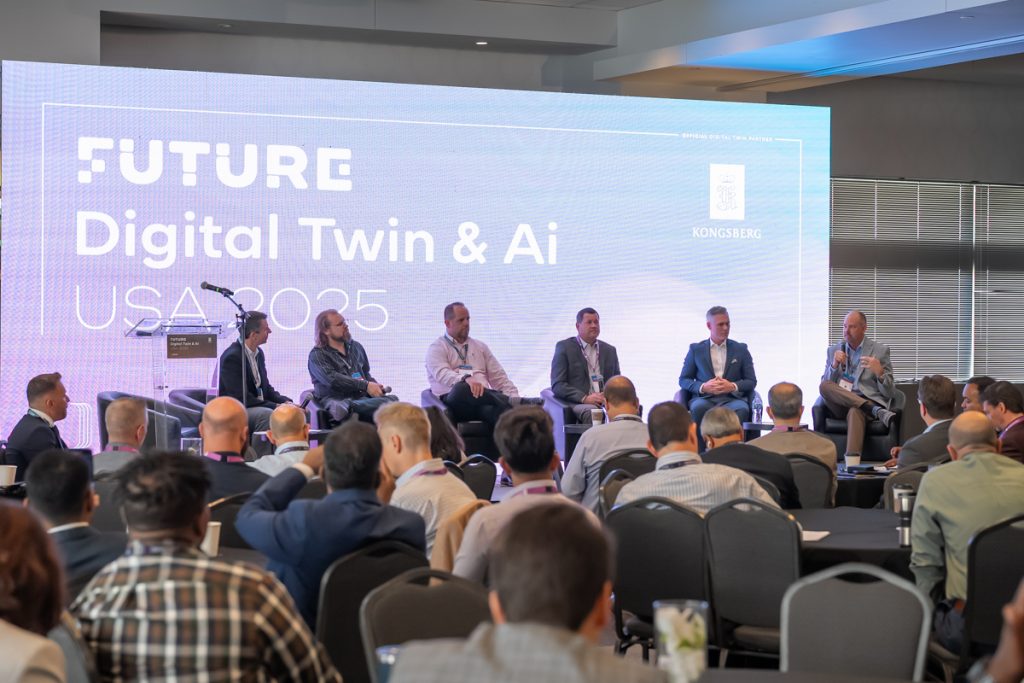
Digital twins and generative AI technology are now showing their worth across the energy industry, by boosting output and efficiency, improving decision-making and freeing the workforce from mundane tasks, speakers told the Future Digital Twin and AI (USA) conference, held in Houston on May 29th 2025.
The event attracted experts from the oil and gas industry and beyond to discuss the sector’s digital transformation, with a focus on advances in AI and the energy transition.
Organised by Cavendish Group International, the conference brought together energy and technology professionals and innovators from 144 organisations, creating a vibrant forum to discuss the opportunities and challenges presented by AI and digital twin technology, both of which are now becoming firmly embedded in the industry’s DNA.
Innovators and thought leaders on stage at the event represented diverse organisations and institutions, including bp, Chevron, DNV, Dow Chemicals, ExxonMobil, Motiva, Occidental Petroleum, Royal Dutch shell, Siemens Energy, Schneider Electric, and Wood to name but a few.
Among the major themes in Houston were the way digital twins and AI are now clearly being shown to improve the efficiency and reliability of upstream and refining operations, the continuing efforts to gather, clean up and protect the shared data on which these new technologies depend, and the need to put people at the heart of a process that is transforming corporate culture.
Adam Soroka, CEO of Cavendish Group International, said digital twins and AI were only recently considered by many as a nice to have technologies, but the event had shown they were now becoming foundational within the oil and gas industry
“We are immensely proud to have produced a conference that not only offers transparency on the challenges and opportunities but offers understanding on how the focus has shifted towards the role of digital twins as systems of orchestration within the industry,” he said.
Technologies like agentic AI now enable digital twins to work autonomously, optimize journal activity or well integrity monitoring and play a huge impact in driving operational efficiency, most importantly safety and sustainability.
“This is automating with purpose, fundamentally improving the speed of decision making,” Soroka said.
Shane McArdle, CEO of Kongsberg Digital and Chairman of the Conference Advisory Board, agreed that the digital twin landscape was evolving quickly.
“Much of the talk is not even really about digital twins anymore, except as an enabling mechanism. Now we’re talking more about the industrial work surfaces where the actual work is happening, built on digital twins and AI,” he said.
McArdle said Future Digital Twin and Generative AI Conferences around the world were providing essential arenas for those at the cutting edge of the digital transformation to exchange information.
“I strongly believe that we have grown as an event because it brings together such an engaged community of industry leaders. What began as a vision for cross-industry collaboration has become a trusted space for knowledge sharing and open conversations, he said.
“Even though we talk about technology at these conferences, it’s really about people at the core. An arena like this is essential for us to learn from and be inspired by each other – in both our successes and mistakes.”