The trend towards using the sites of disused or soon-to-be-retired coal-fired power stations to house data centres is accelerating, potentially offering a lower-cost, time-saving solution to a complex problem.
Although there is talk of extending the life of gas-fired power stations to supply AI’s power needs, this is not about reopening coal-fired power stations to supply electricity to data centres. Instead, the idea is to use the existing surrounding infrastructure of old fossil fuel plants to speed up the process of supplying electricity to power-hungry data centres and lower costs.
Electricity for data centres built on the site of a former power plant can come from grid connections already in place, tapping renewable energy generated elsewhere, or supplementing new renewable sources being developed close to the facilities.
It is a partnership between big tech firms and traditional utilities that both sides are keen to foster.
Existing grid connections serving former power plants save crucial time and money that would otherwise be spent on building capable grid infrastructure from scratch by the likes of Amazon, Microsoft and Google, as they scramble to accommodate fast-growing demand for AI processing capacity. Just getting planning permits in place for data centres on greenfield sites and their power infrastructure can take years.
The same goes for easy access to water supply, which a fossil fuel-fired power station requires, and which data centres also need for cooling.
On the other side of the equation, utilities and other owners of these power stations get to defer or reduce their own infrastructure decommissioning costs, or make money from selling the sites to data centre operators, while also signing lucrative, long-term electricity supply contracts with those operators.
As Shane McArdle, CEO of Kongsberg Digital and a regular keynote speaker at Future Digital Twin and Generative AI Conferences, put it in a recent LinkedIn post: “Europe’s old coal and gas plants aren’t dying — they’re being reborn. Energy giants are turning decommissioned sites into AI data centres, because they already have what AI craves – grid connections, cooling infrastructure and speed to deploy.”
The past is enabling the future, according to McArdle. “Fossil assets become digital hubs. Utilities unlock new revenues. And every conversion accelerates decarbonisation by pairing data centres with renewables instead of coal,” he said.
There is no shortage of potential sites for data centre developers to consider. In the European Union and UK alone, over 150 hard coal and lignite plants are set to close by 2038 to meet climate targets, adding to 190 plants that have closed since 2005, according to a recent Reuters article on the topic.
European utilities including Enel, Engie and RWE say they are keen to bring data centres to the sites of their ageing power stations. In the UK, Microsoft said in 2024 it planned to spend over £100m to purchase land on the former site of two power plants at Skelton Grange near Leeds, northern England to build a data centre there. More such plans are in the pipeline worldwide.
“It’s becoming more and more evident that AI’s boom and energy’s transition cannot be separate stories — they’re the same story,” McArdle said.
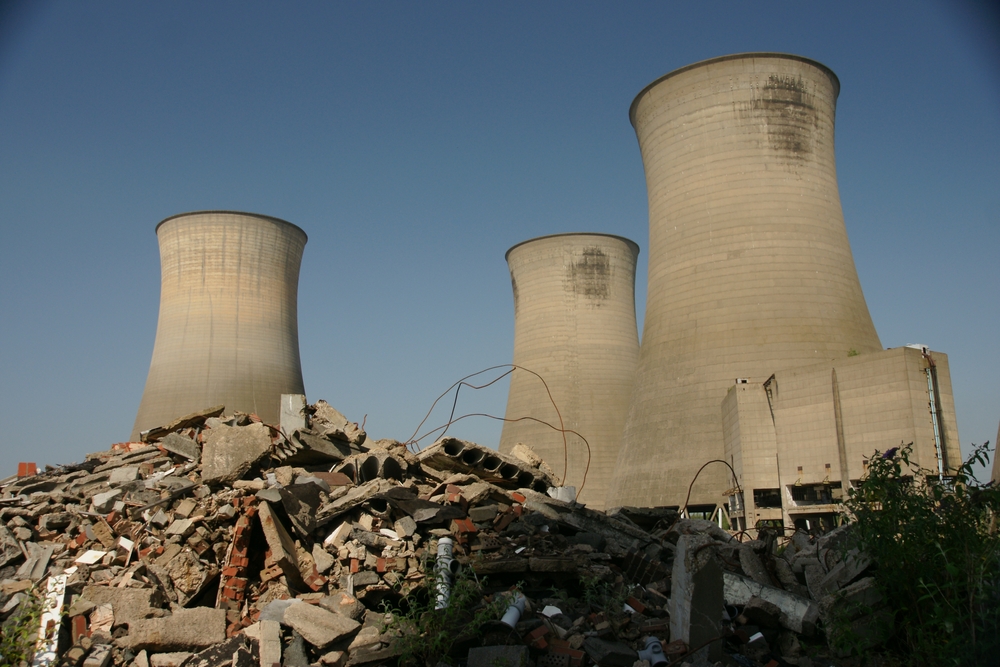
(Photo: Disused Thorpe Marsh coal-fired power station in northern England/Shutterstock)